

Chad Montgomery
Real Brokerage LLC · New Construction Specialist · 20+ Years
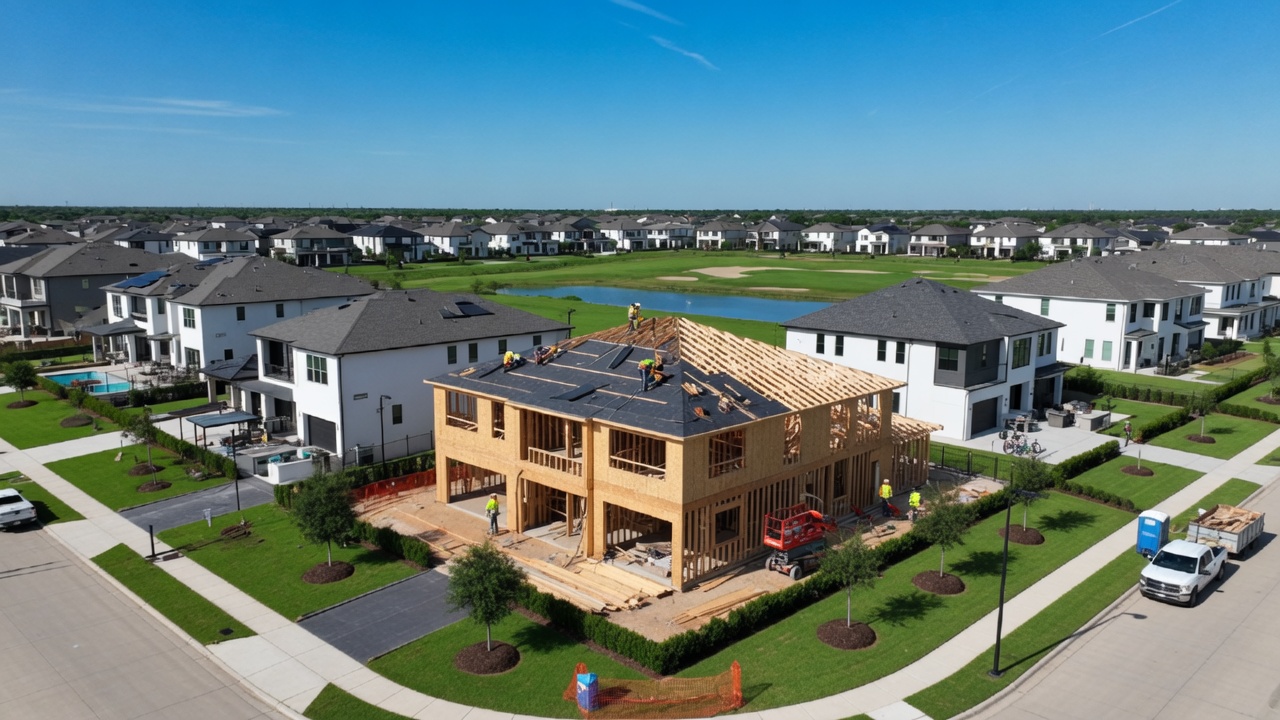
New construction is booming in Collin County right now, and honestly, I have never seen anything like it in my 20-plus years of selling real estate here. Frisco, Prosper, Celina, McKinney, and Anna are adding thousands of new homes every year, and buyers from across the country are taking notice. But here is the thing — buying a new-construction home is not the same as buying a resale, and the mistakes I see buyers make can cost them tens of thousands of dollars. Let me walk you through what you actually need to know before you sign a contract with a builder.
Why Collin County Is the Epicenter of New Construction
There is a reason every major builder in the country is building in Collin County. The U.S. Census Bureau's Building Permits Survey recorded 18,813 new private housing units authorized in Collin County in 2024 — one of the highest permit volumes in the state. While 2025 saw a market-driven cooldown to approximately 8,634 residential permits (a 22% decrease reflecting higher interest rates and shifting demand), the long-term trajectory remains strong. We have available land, a job market that keeps growing, top-rated school districts that attract families, and buyers who want modern homes with modern finishes. Prosper and Celina alone have dozens of active communities with homes ranging from the $400s to well over $2 million. Frisco continues to expand north, with new master-planned communities breaking ground every quarter. McKinney is blending new builds into established neighborhoods, and Anna is emerging as the next frontier for buyers who want space, value, and room to grow.
The demand is real. Corporate relocations to North Texas keep pouring in, and many of those buyers specifically want new construction — they want the latest energy efficiency, modern floor plans, and the peace of mind that comes with everything being brand new.
Production Builders vs. Custom Builders — What's the Difference?
This is one of the first conversations I have with any new-construction buyer, because the difference is significant and it directly impacts your budget, timeline, and experience.
Production builders — companies like Drees, Coventry, Perry Homes, Ashton Woods, and TriPointe — build in planned communities with set floor plans and design options. You pick your lot, choose your elevation, then visit a design center to select finishes like countertops, cabinets, flooring, and fixtures. The process is structured and relatively predictable, which is great for buyers who want a clear timeline and a set budget range. The current average new-construction home price in Collin County generally runs 15% to 25% higher than comparable resale homes, reflecting builder upgrades, modern finishes, and warranty coverage. Most production builders in Collin County are delivering homes in the $500K to $1.5M range, though some communities go higher.
Custom builders work differently. They build one-of-a-kind homes on your lot or a lot they help you acquire. You are involved in every decision — from the architectural plans to the structural details to the finishes. This is where you see homes in the $1M to $10M range, especially in communities like Whiskey Ridge in Prosper, Gentle Creek in Aubrey, or the luxury estates going up around Lake Lavon. Custom gives you total control, but it also means longer timelines, more decisions, and a budget that can shift if you are not careful.
Neither option is better than the other — it depends on what you want, your budget, and how involved you want to be in the process. That is exactly what I help my clients figure out.
Builder Incentives — They Are Real, But Read the Fine Print
Almost every builder in Collin County is offering some kind of incentive right now. Common offers include closing cost assistance, design center credits, rate buydowns through their preferred lender, and lot premiums waived. These incentives can be worth $10,000 to $50,000 or more depending on the builder and the price point.
Here is what most buyers do not realize, though: builders structure their pricing to absorb these incentives. That means the "free" upgrade at the design center is already baked into the base price. I negotiate on my clients' behalf to get the best combination of price reduction and upgrades — and more importantly, I help them understand which incentives are genuine value and which ones are marketing. Having a knowledgeable agent in that builder relationship saves my clients real money, every single time.
The Design Center — Where Budgets Go to Die (If You're Not Careful)
The design center appointment is one of the most exciting parts of buying new construction — and one of the most dangerous for your budget. You walk into a beautiful showroom and start picking out upgrades: quartz countertops, hardwood floors, custom cabinetry, upgraded lighting, extended tile, premium appliances. It all looks amazing, and before you know it, you have added $40,000 to $80,000 to your base price.
My advice? Go in with a clear budget and prioritize the things that are hard or expensive to change later. Flooring, countertops, cabinetry, and electrical upgrades are worth investing in during construction. Cosmetic things like paint colors, light fixtures, and hardware can be updated later for a fraction of the cost. I prepare my buyers for this appointment so they walk in focused and walk out feeling great about their choices.
Lot Premiums — Not All Lots Are Created Equal
In any new-construction community, lot premiums can vary wildly. A corner lot, a lot backing to a greenbelt, or a pie-shaped lot on a cul-de-sac can carry a premium of $20,000 to $100,000 or more over a standard interior lot. Some builders disclose lot premiums early; others weave them into the base price and only reveal the breakdown when you start asking questions.
I help my buyers evaluate whether a lot premium is worth it based on resale value, privacy, and livability. Not every premium lot is a smart investment, and not every standard lot is a bad deal. It depends on the community layout, the orientation of the home, and what matters to your family.
Financing — Don't Assume the Builder's Lender Is Your Best Option
Most builders have a preferred lender, and they will offer you incentives to use that lender — sometimes $10,000 or more in credits. But here is what I always tell my clients: get a quote from the builder's lender AND from an independent mortgage company. I have an in-house mortgage team that works with buyers every day, and we regularly find that the combination of a competitive independent rate and the builder's price flexibility results in a better overall deal.
The builder's lender is not always the wrong choice, but you should never assume it is the right one without comparing. This is one of those areas where having an experienced agent and a trusted mortgage partner can literally save you thousands over the life of your loan.
Construction Timelines — What to Realistically Expect
Production builders in Collin County are currently quoting build times of 6 to 10 months from foundation pour to closing. Custom builds can take 12 to 18 months. Here is the reality, though — delays happen. Supply chain issues, weather, labor shortages, and permitting backlogs can push your closing date back by weeks or even months.
I always build a buffer into my clients' expectations and, when possible, into their living situation planning. If you are renting and need to time your move, that is a conversation we need to have early. I also stay on top of the builder's progress throughout the build so my clients are never blindsided by a delay.
Independent Inspections — Yes, You Still Need One
This is the one piece of advice I give to every single new-construction buyer, and it surprises some people: get an independent inspection, even on a brand-new home.
Builders have their own quality control processes, and their supervisors do a walkthrough before closing. But their job is to protect the builder's interests. An independent inspector works for you. In my experience, even the best builders miss things — a window that is not sealed properly, a HVAC system that was not calibrated correctly, framing that is slightly out of spec, or a roof installation that needs attention. These issues are much easier and cheaper to fix before you close than after you move in.
I also recommend my buyers request a pre-drywall inspection. This is when the home is framed but before the walls go up. An inspector can check the framing, electrical, plumbing, and mechanical systems while they are still exposed. It is one of the most valuable inspections you can get on a new build, and it costs a few hundred dollars. That is a small price for peace of mind on a $500K to $2M investment.
Warranty Details — Know What You're Getting
Every production builder in Texas is required to provide a warranty. The standard is typically a one-year workmanship warranty, a two-year systems warranty (plumbing, electrical, HVAC), and a ten-year structural warranty. But what those warranties actually cover varies significantly from builder to builder.
Some builders make the warranty claim process seamless. Others make you jump through hoops. Before you sign a purchase contract, I help my clients review the warranty documentation so they know exactly what is covered, what is excluded, and how to file a claim if needed. This is not the kind of thing you want to figure out after you have a problem.
Spec vs. Custom — Which Is Right for You?
A "spec" home (short for speculative) is a home the builder has started building without a buyer. These are great for buyers who want to move in quickly, because the home is already under construction or near completion. You may have limited ability to make changes, but you can often still select some finishes. Spec homes are common in Collin County communities, and they can sometimes come with additional incentives because the builder wants to close that inventory.
A "to-be-built" or custom home gives you full control from the ground up. You choose everything, but you also wait longer and make more decisions. Both paths have their advantages, and I help my clients decide based on their timeline, budget, and how much control they want over the process.
Why Having an Agent Saves You Money — Even With New Construction
Here is something a lot of buyers do not realize: the builder's sales agent works for the builder, not for you. They are friendly and helpful, but their loyalty is to the builder's bottom line. Having your own agent — one who specializes in new construction — gives you someone in your corner who knows the contracts, understands the incentives, and has relationships with builders throughout Collin County.
I have sold hundreds of new-construction homes. I know which builders cut corners, which ones stand behind their product, how to negotiate upgrades, and how to protect my clients through the entire process. And here is the best part — in most cases, the builder pays my commission, so my representation costs you nothing. There is no reason to go into a six-figure purchase without someone watching out for your interests.
Referenced Data & Sources
- U.S. Census Bureau — Building Permits Survey (FRED). Collin County authorized 18,813 new private housing units in 2024.
- HBW Weekly — Texas New Residential Construction Review (2025). 2025 permit data showing a 22% year-over-year decrease in Collin County.
- Collin County Central Appraisal District — Property Tax & Valuation Data. Assessment data used for new construction vs. resale price comparisons.
Ready to explore new construction in Collin County?
Whether you are looking at a production community in Frisco or a custom estate in Prosper, I can guide you through every step — from choosing the right builder to closing day. Let's find your perfect new home.
Schedule a New Construction Consultation